Why Do Websites Choose RumbleTalk? The Features That Set It Apart from Generic Chat Tools

A chat widget with message moderation is more than a comment box on your website. It is a real-time group conversation tool that gives you complete control over what gets published, who can speak, and at what pace — before your audience ever sees a single word.

Most websites add a chat widget and immediately face the same problem: no control over what gets posted. Spam, off-topic comments, and disruptive users turn a community tool into a liability. The question is not whether to add chat to your website — it is whether the chat widget you choose can handle a real audience without falling apart.

RumbleTalk was built from the ground up with moderation at its core. It is not a generic chat box with a report button bolted on. It is a group chat platform designed for websites, live events, and communities that need control, flexibility, and scale. Here is what sets it apart.

What a Chat Widget With Message Moderation Really Means

Most chat widgets offer moderation as an afterthought — a delete button, maybe a ban option. True message moderation means something different: every message passes through an admin review queue before the rest of the room ever sees it.

This is pre-moderation. It is the difference between reacting to a problem after it has already been seen by hundreds of people, and preventing it from appearing at all. For brands, live event hosts, educational platforms, and community managers, this distinction matters enormously.

A chat widget with message moderation protects your brand, keeps conversations on topic, and gives your audience a better experience. RumbleTalk offers three specific moderation features that no other generic chat widget provides.

The 3 Moderation Features No Other Chat Widget Has

1. Approve Before It Goes Live

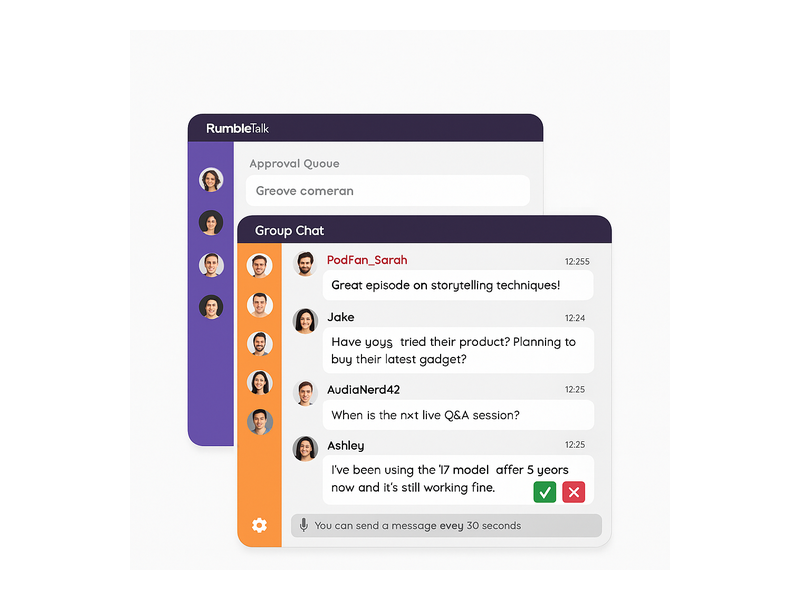
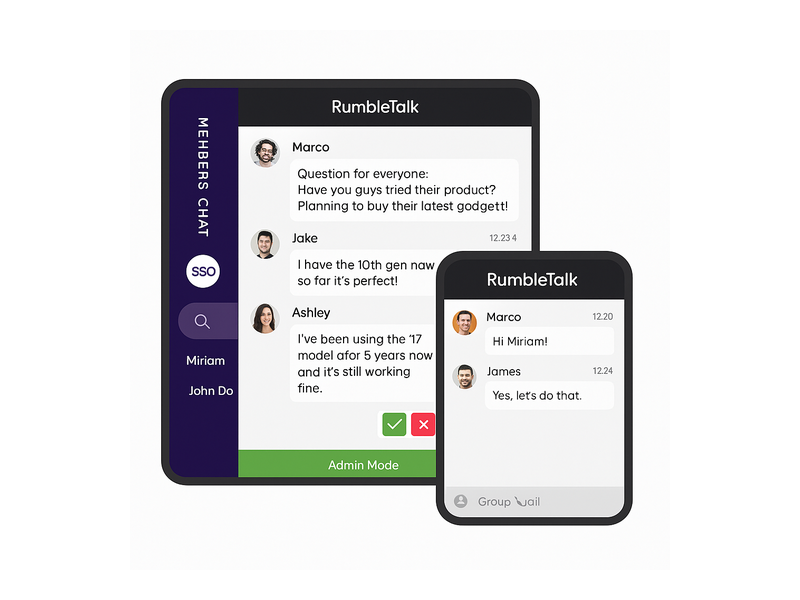
In RumbleTalk’s moderated chat mode, every message submitted by a user lands in an admin queue first. The moderator sees it, reviews it, and either approves it — pushing it live to the room — or rejects it, keeping it invisible to everyone else.

This is ideal for sensitive topics, brand-owned events, Q&A sessions with executives, or any situation where the cost of a bad message appearing in public is high. The audience sees a clean, curated conversation. The moderator sees everything.

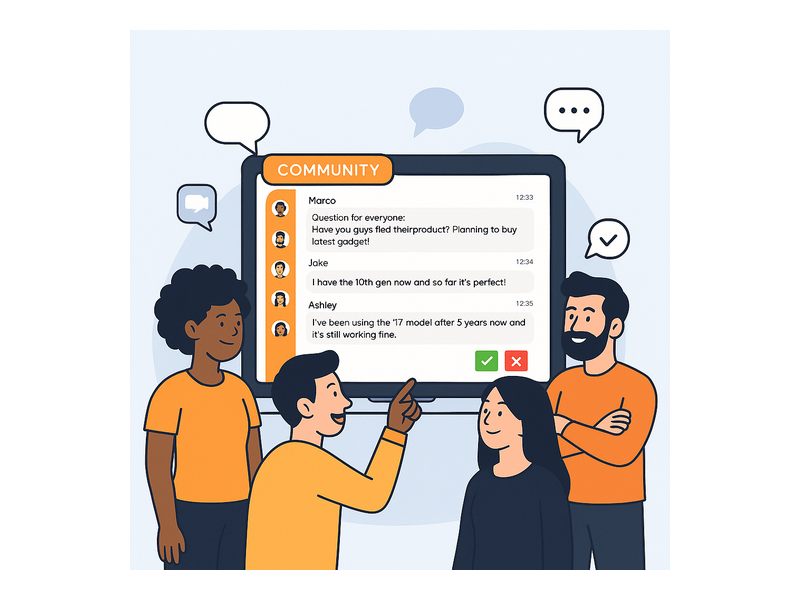
RumbleTalk moderated chat showing message approval queue with green checkmark and red X buttons

2. Admin Mode — Silence the Room, Own the Stage

Admin Mode is a single-click feature that freezes all user messages instantly. When Admin Mode is active, only admins and moderators can post to the chat. Every other user’s input bar is locked.

This is invaluable during live events. When a keynote speaker is presenting, when an important announcement is being made, or when a situation needs to be reset, Admin Mode gives the host total authority over the conversation — without removing or banning a single user. The moment the host is ready to open the floor again, one click restores normal chat.

RumbleTalk admin mode active — message input locked for users, only admins can post

3. Slow Down Chat — Throttle the Pace

In high-traffic chat rooms, messages can scroll past faster than anyone can read them. Slow Down Chat lets admins set a minimum time interval between messages from the same user — for example, one message every 30 seconds.

This single setting transforms a chaotic flood of overlapping messages into a readable, manageable conversation. It prevents spam, stops any one user from dominating the room, and keeps the overall quality of discussion high. Users see a clear countdown timer so they know when they can post again.

RumbleTalk slow down chat feature showing cooldown timer — you can send a message every 30 seconds

Who Needs a Chat Widget With Message Moderation?

These moderation tools are not just for large enterprises. Any website that hosts a real audience benefits from them:

  • Live event hosts — webinars, virtual conferences, sports broadcasts, and online summits where the conversation must stay on track
  • Community managers — always-on chat rooms where tone and quality matter for member retention
  • Educational platforms — courses and training sessions where instructors need to moderate student questions
  • Website owners embedding chat for the first time who want control from day one

Beyond Moderation — Multiple Chat Modes for Every Use Case

RumbleTalk is not a single chat format. It offers six distinct chat modes, each designed for a specific context:

  • Group Chat — open real-time conversation for any audience
  • Moderated Q&A — structured question and answer with full moderation control
  • Members Chat — restricted to authenticated or registered users only
  • Social Chat — open chat with social login
  • Private Chat — one-to-one conversations between users
  • Queued Chat — messages delivered in a controlled queue format

Every mode supports the three moderation features described above. Whether you are running a members-only community or an open public event, the same tools are available to keep the conversation under control.

Embed Anywhere — No Dev Team Required

RumbleTalk embeds into any website with a single code snippet. It works out of the box with WordPress, React, Angular, and any standard HTML page. There is no complex backend integration, no third-party redirect, and no dependency on an external platform’s design or branding.

You own the chat room. You control the experience. Your users stay on your website.

Trusted at Scale

RumbleTalk powers more than 180,000 customer-created chat rooms. The moderation tools described in this article are not experimental features — they have been tested and refined across industries including sports broadcasting, online education, fintech communities, live events, and faith organizations.

At that scale, the difference between a chat widget that works and one that falls apart under pressure is exactly what separates RumbleTalk from generic alternatives.

The Bottom Line

Any website can add a chat box. Not every chat box gives you the tools to run it properly. A chat widget with message moderation — one that lets you approve messages before they go live, silence the room when you need to, and throttle the pace of conversation — is what makes the difference between a chat tool and a real community platform.

RumbleTalk is built for website owners, event hosts, and community managers who cannot afford to lose control of their audience. If that sounds like your use case, the next step is simple.

Try RumbleTalk free and embed your first moderated chat room today.

From Chaos to Clarity: Using Moderated Chat in High-Traffic Live Events

Anyone who has run a live online event with hundreds — or thousands — of attendees knows this moment:

The stream goes live.
The audience floods in.
And within seconds, the chat explodes.

Questions, reactions, emojis, spam, repeated messages, off-topic comments — all moving faster than a human brain can reasonably process.

Chat is powerful, but without structure, it quickly becomes noise.

This is where moderated chat changes everything. Not as a control mechanism, but as a way to turn raw audience energy into meaningful interaction — especially in high-traffic live events.

This post explores why chat chaos happens, how moderated chat restores clarity, and how advanced setups — like multiple parallel chat rooms — let large events scale without losing control.

Why Live Event Chats Spiral Out of Control

Live events compress time, emotion, and attention into a single shared moment. People want to react instantly — and chat becomes the outlet.

moderated chat platform for virtual event

Once an event grows beyond a small group, a few patterns emerge:

  • Messages arrive faster than anyone can read
  • Important questions disappear within seconds
  • Participants repeat themselves because they feel ignored
  • Moderators fall behind
  • Speakers stop paying attention to chat altogether

The result isn’t engagement — it’s fragmentation.

The irony is that the bigger the event, the more structure chat needs.

Moderated Chat: Control Without Killing the Vibe

Moderated chat is often associated with restriction, but in practice it does the opposite.

Instead of letting everything through, moderated chat focuses on:

  • Relevance
  • Timing
  • Clarity
  • Flow

Messages are still written in real time. They simply pass through a short review step before appearing publicly.

That single layer of review transforms chat from a firehose into a conversation.

The Hidden Psychology of Moderation

An interesting side effect of moderated chat is how it changes audience behavior.

When participants know their messages are reviewed:

  • They think before posting
  • Questions become clearer
  • Tone becomes more respectful
  • Spam nearly disappears

Moderation doesn’t just filter messages — it improves message quality at the source.

This creates a feedback loop: better messages → better discussion → higher perceived value for attendees.

Pre-Moderation in RumbleTalk: Full Control Without Breaking the Flow

Pre-moderation is the most structured form of moderated chat, and it’s especially useful in high-traffic, high-risk, or high-visibility live events. Instead of reacting to messages after they appear, pre-moderation ensures that nothing is published to the chat until it’s approved.

screen messages

In RumbleTalk, pre-moderation is designed to feel lightweight for the audience, but powerful for the event team.

Here’s how it works in practice.

How Pre-Moderation Works During a Live Event

When pre-moderation is enabled:

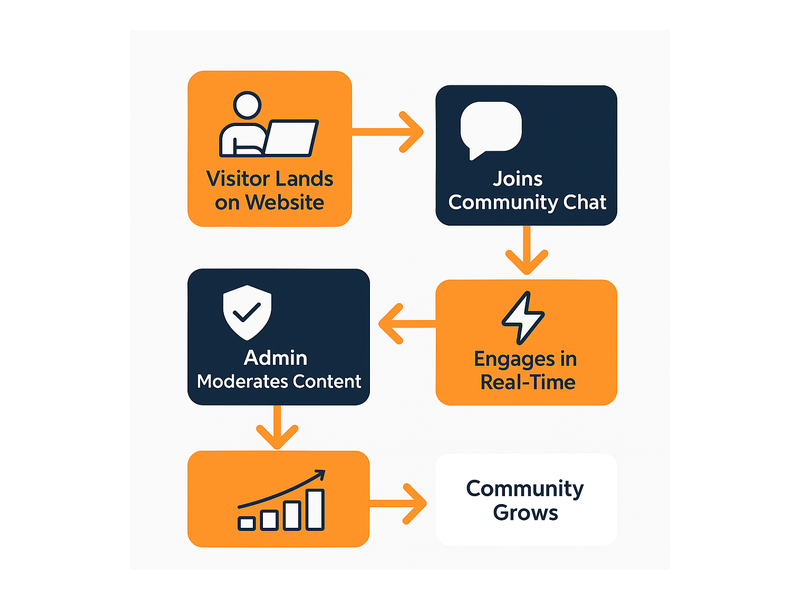
  1. Attendees submit messages as usual
  2. Messages enter a private moderation queue
  3. Moderators review messages in real time
  4. Only approved messages appear in the public chat

From the user’s perspective, the experience feels natural. They type, they send, and the event continues. There are no error messages, blocks, or visible rejections — just a short delay before approved messages appear.

Behind the scenes, moderators have full visibility and control.

What Makes Pre-Moderation Different From Regular Moderation

Regular moderation often means cleaning up after messages appear.
Pre-moderation shifts moderation before visibility, which changes everything.

With pre-moderation:

  • No spam ever reaches the audience
  • No inappropriate messages appear even briefly
  • No screenshots of “oops moments”
  • No legal or brand exposure risks

This is why pre-moderation is commonly used in:

  • Investor and earnings calls
  • Large branded events
  • Educational institutions
  • Financial or medical webinars
  • Events with public or anonymous access

Moderator Experience: Fast, Simple, and Scalable

Pre-moderation only works if it’s fast.

In RumbleTalk, moderators see:

  • A live queue of incoming messages
  • One-click approve / reject actions
  • Clear separation between pending and published messages
  • Multiple moderators working in parallel on the same room

This allows a small team to handle very large audiences without falling behind.

Flexible Rules Per Room or Event

Pre-moderation isn’t an all-or-nothing decision.

Event organizers can:

  • Enable pre-moderation only in specific rooms
  • Use it only during sensitive segments
  • Combine pre-moderated main rooms with lighter breakout rooms
  • Assign different moderators per room

This flexibility is critical for complex events where different sessions have different needs.

Why Pre-Moderation Improves Engagement (Yes, Really)

It sounds counterintuitive, but pre-moderation often increases engagement quality.

When users know messages are reviewed:

  • Questions become clearer and more concise
  • Off-topic chatter drops
  • Repetition decreases
  • Moderators surface the best contributions faster

The result is a chat that feels more intelligent, not more restricted.

Pre-Moderation as an Event Safety Net

Think of pre-moderation as insurance.

You may not need it for every event — but when you do, you really do.

It protects:

  • Speakers from distractions
  • Audiences from noise
  • Brands from risk
  • Event teams from last-minute crises

And because it runs quietly in the background, it doesn’t interfere with the live energy of the event.

When to Choose Pre-Moderation

Pre-moderation is usually the right choice when:

  • The event is open to the public
  • The audience size is unpredictable
  • Content sensitivity is high
  • Chat logs will be replayed or archived
  • Zero tolerance for mistakes is required

In those scenarios, pre-moderation isn’t about control — it’s about confidence.

Pre-moderation turns chat from something you hope behaves
into something you know is under control.

And in high-traffic live events, that certainty is what allows everything else to flow.

Keeping Events Fast Even With Moderation

One common fear is latency.

In reality, well-run moderated chats operate with delays measured in seconds, not minutes. When moderation tools are designed correctly:

  • Approval is one click
  • Multiple moderators work simultaneously
  • Queues stay short even with heavy traffic

From the audience perspective, chat still feels live — just calmer and more focused.

When Moderated Chat Becomes Essential (Not Optional)

Moderation shifts from “nice to have” to “must have” when:

  • The event has 300+ attendees
  • Questions are part of the agenda
  • The event is recorded or replayed
  • Speakers should not monitor chat directly
  • Legal, financial, or brand risk exists

In these cases, open chat is not more “authentic” — it’s simply unmanaged.

Adding Structure With Multiple Chat Rooms in Parallel

As events grow, moderation alone isn’t always enough.
The next scaling step is multiple chat rooms running in parallel.

This is where clarity really starts to compound.

Why One Chat Room Isn’t Enough Anymore

Large events often mix very different types of interaction:

  • General discussion
  • Q&A for speakers
  • Technical questions
  • Networking or side conversations

When all of these happen in a single stream, even moderated chat becomes crowded.

Multiple rooms allow you to separate intent, not just messages.

Common Parallel Chat Room Setups

High-traffic live events frequently use room structures like:

  • Main Event Chat
    Moderated, curated, and visible to all attendees
  • Q&A Room
    Strictly moderated, focused on questions for speakers
  • Topic-Specific Rooms
    Separate rooms per track, session, or subject
  • Backstage / Staff Room
    Internal coordination for moderators and hosts

Each room has its own rules, moderators, and pace.

Moderation Across Multiple Rooms

Parallel rooms don’t increase complexity — they reduce it.

Because:

  • Each room has a smaller, more focused audience
  • Moderators specialize by topic
  • Message queues are shorter
  • Speakers receive cleaner input

In practice, this means fewer moderators can manage larger events more effectively.

Dynamic Room Assignment During Events

Advanced event setups often:

  • Open rooms only when sessions start
  • Close rooms automatically when sessions end
  • Move users between rooms without reloading
  • Enable moderation rules per room

This allows events to feel structured without feeling rigid.

From the user’s perspective, they’re simply “following the event flow.”

Using Parallel Rooms for Better Audience Experience

Multiple rooms also give attendees choice.

Some people want:

  • To ask questions
  • To discuss with peers
  • To stay quiet and observe

Parallel chat rooms respect different engagement styles without forcing everyone into the same channel.

This inclusivity often increases overall participation — even if each room is quieter.

Moderated Chat and Multi-Room Events After the Live Moment

Parallel, moderated rooms dramatically improve post-event value.

moderated chat

Instead of one noisy chat log, you get:

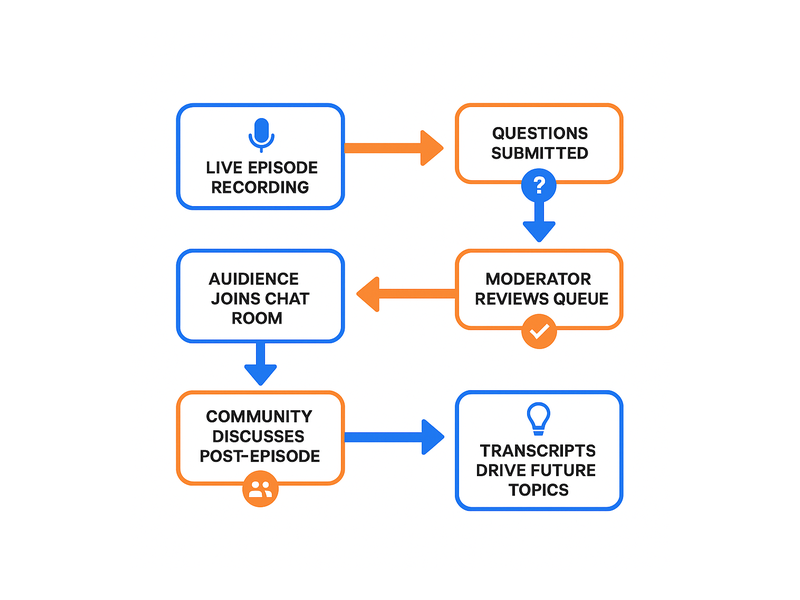
  • Clean Q&A transcripts
  • Session-specific discussions
  • Reusable content
  • Searchable insights

For events that live on as recordings, this is a huge advantage.

Best Practices for Moderation in Multi-Room Events

A few patterns that work consistently:

  • Assign clear purpose to each room
  • Tell attendees where to post what
  • Use stricter moderation in main rooms
  • Allow lighter moderation in breakout rooms
  • Rotate moderators during long events
  • Summarize room activity back to the main stage

Moderation works best when it feels like guidance, not enforcement.

From Noise to Orchestration

At scale, live events stop being conversations and start becoming systems.

Moderated chat brings order.
Multiple rooms bring architecture.

Together, they transform chat from:

  • A distraction → a signal
  • A risk → an asset
  • A liability → a platform feature

High-traffic live events don’t fail because audiences are too loud.

They fail because the infrastructure isn’t designed for scale.

Moderated chat provides clarity.
Parallel rooms provide focus.

And when both work together, chat stops being chaos — and becomes the connective tissue of the event itself.

That’s not control.

That’s orchestration.

External Chat for Companies: Turning Users Into an Active Real-Time Community

Most companies already communicate with their users. They send emails, publish content, and post updates.

However, communication is not the same as conversation.

What many companies are missing today is real-time, shared conversation, the kind that happens in front of other users, not behind a ticket system or inside a private inbox. This is exactly where external chat for companies comes in.

External chat is not about replacing support tools.
It’s not about internal team messaging.
And it’s definitely not about copying social media.

External chat for companies is about creating a dedicated, owned space where users can talk to each other and to the company, live, in context, and in real time.

When done right, this kind of chat turns users into participants, visitors into regulars, and products into communities.

What Is External Chat for Companies?

External chat for companies is a real-time chat system that lives outside the company’s internal tools and core product logic, but is still deeply connected to the user experience.

In simple terms:

  • It’s not Slack for employees
  • It’s not a helpdesk widget
  • It’s not a comment section on social media

It’s a standalone conversation layer that can be embedded anywhere the company interacts with its audience.

Common places where external chat lives:

  • Websites and landing pages
  • Member portals and dashboards
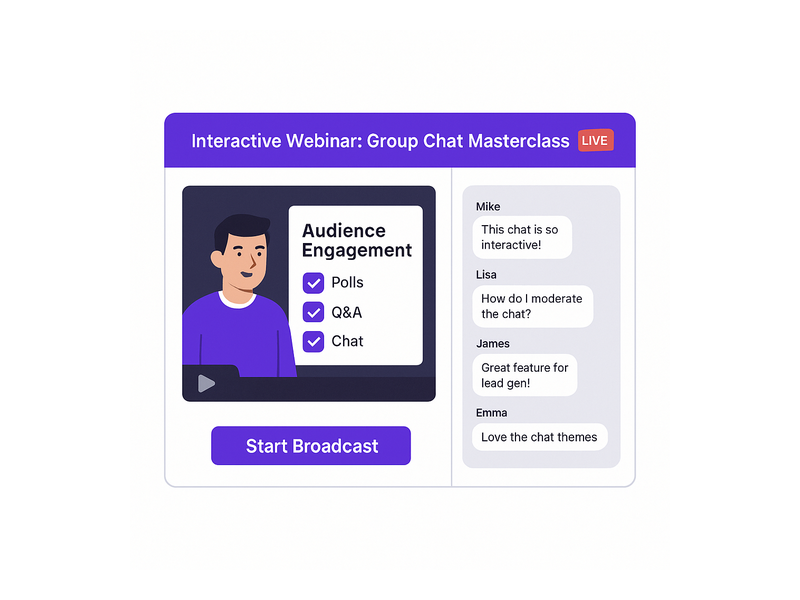
  • Event pages and live streams
  • Content hubs and knowledge platforms

The key idea is that the chat is external to internal operations, but internal to the company’s ecosystem.

Why External Chat for Companies Creates Real Communities (Not Just Messages)

Messages alone don’t create communities.
Presence does.

When users see other users online, typing, reacting, and responding in real time, something changes psychologically. The experience becomes social instead of transactional.

External chat for companies creates this effect because:

  • Conversations are visible
  • Timing is shared
  • Participation feels lightweight

Unlike forums or comment threads, real-time chat does not demand long-form commitment. Users can jump in, say something small, and feel part of something bigger.

Core community signals created by external chat

  • Live activity indicators
  • Ongoing conversations users can join mid-stream
  • Natural back-and-forth between users
  • Immediate reactions and responses

Over time, these signals create habit. And habit is the foundation of community.

External Chat for Companies vs. Built-In Product Chat

Many companies try to solve community engagement by adding chat directly inside their product. On paper, it sounds logical.

In practice, it often fails.

Built-in product chat usually suffers from:

  • Limited screen space
  • Feature overload
  • Poor discoverability
  • Tight coupling to product flows

External chat for companies avoids these problems by being purpose-built for conversation, not squeezed into an existing UI.

Key difference in mindset

  • Product chat is feature-driven
  • External chat is behavior-driven

The goal of external chat is not to “add chat.”
The goal is to create a place where conversations want to happen.

From Users to Participants: The Real Business Shift

Most digital products have users.
Very few have participants.

Users consume.
Participants contribute.

External chat for companies accelerates this shift because it:

  • Reduces the barrier to participation
  • Makes interaction visible and rewarding
  • Creates social proof instantly

When a user sees others talking, asking questions, or sharing insights, the product stops feeling like a tool and starts feeling like a space.

And spaces create loyalty.

Common Use Cases for External Chat for Companies

External chat works best where timing, context, and shared attention matter.

live chat

Community-Driven SaaS Platforms

SaaS users often learn more from each other than from documentation. External chat enables:

  • Peer-to-peer learning
  • Live discussions during feature launches
  • Feedback loops that feel human

Content and Media Websites

Content becomes more engaging when discussion is part of the experience:

  • Live chat during article drops
  • Ongoing conversations between publications
  • Readers interacting with each other, not just the content

Events, Webinars, and Live Streams

This is where external chat shines:

  • Chat as a second screen
  • Questions, reactions, and commentary in real time
  • Conversations that continue even after the event ends

Membership Platforms

External chat replaces slow forums with:

  • Immediate interaction
  • Daily touchpoints
  • A sense of “who’s around right now”

Why External Chat for Companies Outperforms Social Platforms

Many companies rely on social media to create “community.”
The problem is that those communities don’t belong to them.

External chat for companies brings the conversation back home.

Advantages over social platforms

  • Full ownership of data and conversations
  • No algorithms deciding visibility
  • No distraction from unrelated content
  • Consistent brand and user experience

Instead of chasing engagement across platforms, companies can centralize conversation where their product already lives.

The Technical Foundation of External Chat for Companies

While the concept is human, the execution must be technical.

Embedding Chat Anywhere

External chat systems are designed to be embedded:

  • On websites using simple scripts
  • Inside platforms using SDKs
  • On landing pages without heavy integration

This flexibility allows companies to deploy chat exactly where engagement matters most.

Auto-Login and User Identity

One of the biggest friction points in chat is registration.

external chat for companies

External chat for companies typically supports:

  • Auto-login using existing user IDs
  • Passing usernames, roles, or permissions
  • Persistent identities across sessions

The result is a seamless experience where users feel recognized without extra steps.

A Special Case: Pre-Moderated Chat and Message Approval

Not every company wants completely open, real-time chat. And that’s okay.

In some industries and situations, control is more important than speed. This is where a message approval (or queued chat) model becomes essential.

what is queued chat room

What Is Message Approval Chat?

In this mode, messages sent by users do not appear immediately. Instead:

  • Messages enter a moderation queue
  • A moderator reviews them
  • Approved messages are published to the chat

From the user’s perspective, the experience still feels conversational, just slightly delayed.

When Does This Make Sense?

Message approval is especially useful for:

  • Live events with large audiences
  • Financial or regulated industries
  • Educational environments
  • Public-facing brand discussions

Benefits of Pre-Moderated External Chat

  • Prevents spam and abuse before it appears
  • Maintains brand tone and quality
  • Reduces moderator stress during peak activity
  • Allows companies to open chat safely

This option lets companies enjoy the community benefits of external chat without sacrificing control or compliance.

Managing Scale Without Killing the Conversation

As communities grow, chaos can follow.

External chat for companies addresses scale through structure:

  • Multiple rooms or topics
  • Role-based permissions
  • Moderation tools

The goal is not to silence users, but to keep conversations readable and meaningful.

Well-structured chat encourages:

  • Smaller, focused discussions
  • Better signal-to-noise ratio
  • Longer engagement sessions

Trust, Identity, and Human Presence

Trust is fragile in digital spaces.

Anonymous chat often collapses into noise.
Over-automated chat feels artificial.

External chat for companies works best when:

  • Users have persistent identities
  • Roles are visible (member, host, moderator)
  • Real people are clearly present

This creates accountability without intimidation and openness without chaos.

Measuring Success in External Chat Communities

Counting messages is easy.
Understanding engagement is harder.

Better indicators include:

  • Returning users to chat
  • Conversations between users (not just with hosts)
  • Time spent actively viewing chat
  • Participation during key moments

External chat for companies succeeds when chat becomes a destination, not an afterthought.

Common Mistakes Companies Make With External Chat

Many chat initiatives fail for predictable reasons.

Typical mistakes

  • Treating chat as a support replacement
  • Launching chat without onboarding users
  • Overusing bots and automation
  • Ignoring moderation until it’s too late

External chat is not a widget.
It’s a social system.

The Long-Term Value of External Chat for Companies

Over time, something interesting happens.

Users start:

  • Recognizing each other
  • Returning just to see who’s there
  • Associating the product with people, not features

This is when external chat stops being a tool and starts becoming infrastructure.

It becomes:

  • A retention engine
  • A feedback channel
  • A community memory

And unlike ads or campaigns, its value compounds.

External Chat Is the Missing Community Layer

External chat for companies is not about adding another feature.
It’s about acknowledging how people actually want to interact.

Real-time.
Visible.
Human.