

SaaS Products Are No Longer Used Alone. For a long time, SaaS products were designed with a very simple mental model: one user, one screen, one task.
Even when multiple users existed, they were mostly invisible to each other. Everyone logged in, did their work, logged out, and communication happened somewhere else, e.g., email, Slack, WhatsApp, or maybe a forum.
That world is gone.
Today, almost every SaaS product is a shared environment. Users overlap in time. They influence one another. They learn by watching what others do. Then, they ask questions, validate decisions, and look for confirmation before acting.
This is the context in which chat for SaaS companies is changing its role.
Chat is no longer something you “add” to a product once everything else is done. It’s becoming part of how the product itself works. In many cases, removing chat would fundamentally change the experience, not cosmetically, but structurally.
This article explains why.
How Chat for SaaS Companies Originally Entered Products
Chat didn’t enter SaaS products because of a grand vision. It entered because of pressure.
Users wanted a way to communicate.
Teams wanted visibility.
Someone asked, “Can we add chat?”
So chat was bolted on.
Early implementations of chat for SaaS companies usually had a few things in common:
- One generic chat space for everything
- No connection to what users were doing in the product
- No persistence beyond recent messages
- Little or no awareness of user roles
Chat lived next to the product, not inside it.
This worked when SaaS products were:
- Simpler
- Used occasionally
- Operated by individuals rather than groups
But as products matured, this approach started to break.
Conversations became more important. Context mattered. Decisions were made inside the product, but discussed outside of it.
That mismatch created friction.
Why Modern SaaS Products Are Inherently Social
Many SaaS founders still describe their product as a “tool.”
But if you observe how users actually behave, you’ll notice something else.
Modern SaaS products are social systems, even when they don’t look like social networks.
Consider what happens inside most SaaS products today:
- Teams onboard together
- New users learn from experienced ones
- Best practices emerge organically
- Decisions are validated socially
Even products that serve individual users are shaped by collective behavior. Templates, defaults, and workflows often reflect what other users are doing.
Once this dynamic exists, communication stops being optional.
This is where chat for SaaS companies becomes essential, not as messaging, but as coordination.
Coordination is not a feature.
It’s a foundational capability.
Feature vs Product Layer: Why the Distinction Matters
To understand why chat is evolving, it’s important to draw a hard line between features and product layers.
What Makes Something a Feature
A feature is usually:
- Optional
- Replaceable
- Used in specific moments
- Evaluated on utility
Users ask questions like:
- “Do I need this?”
- “Is it better than alternatives?”
- “Can I live without it?”
What Makes Something a Product Layer
A product layer is different:
- It’s always present
- It carries context over time
- It shapes how users behave
- It’s hard to remove without redesigning the product
Product layers are not evaluated rationally. They’re experienced.
Chat is crossing this line.
Once users rely on chat to understand what’s happening inside a product, chat stops being a feature and becomes part of the product’s identity.
This is the turning point for chat for SaaS companies.
Chat as a Contextual Layer Inside the Product
One of the biggest reasons chat is becoming more central is context.
Traditional chat treats all messages as equal. Modern in-product chat does not.
Instead, conversations are increasingly:
- Tied to specific pages
- Associated with specific workflows
- Anchored to specific actions or data
This allows users to:
- Talk about exactly what they’re seeing
- Resume conversations without re-explaining
- Build shared understanding over time
Context transforms chat from noise into memory.
When chat remembers why something was discussed, it becomes part of the product’s logic, not just its interface.
From One-to-One Messaging to Group Interaction
Early chat inside products often focused on private messages.
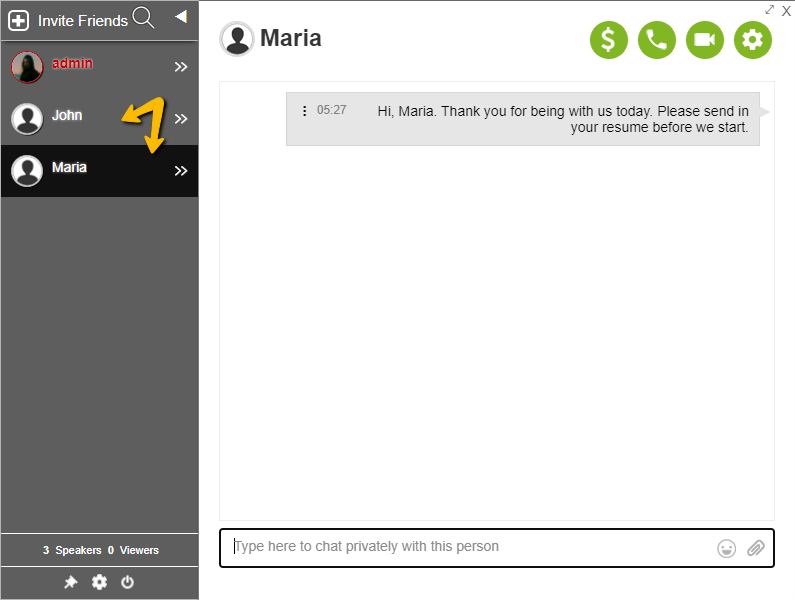
But private messaging solves coordination problems.
Group chat solves alignment problems.
Group chat enables:
- Shared learning
- Public questions and answers
- Collective decision-making
- Social validation
When group chat exists inside a SaaS product, something subtle but powerful happens:
Users stop experiencing the product alone.
They begin to see:
- How others think
- How others decide
- How others solve problems
This social visibility increases confidence and reduces friction.
It’s one of the strongest reasons chat for SaaS companies naturally evolves into a platform layer.
Engagement and Retention: Why Chat Changes the Math
Retention is often discussed in terms of metrics:
- Daily active users
- Feature usage
- Funnel optimization
But human behavior doesn’t work purely on metrics.
People stay where they feel:
- Connected
- Understood
- Invested
Group chat creates these conditions without forcing them.
When users build relationships inside a product:
- Leaving becomes emotionally costly
- Returning feels natural
- Advocacy becomes organic
This is why chat-driven engagement behaves differently from feature-driven engagement. Features attract usage. Communities sustain it.
Ownership: Keeping Conversations Where Value Is Created
Many SaaS companies rely on external platforms for communication.
This creates long-term problems:
- Conversations are disconnected from usage
- Knowledge is fragmented
- Context is lost
- Data lives elsewhere
By embedding chat for SaaS companies directly into the product:
- Conversations stay tied to actions
- Knowledge accumulates internally
- The product becomes the system of record
This isn’t about control for its own sake.
It’s about preserving meaning.
When conversations live where decisions are made, they gain lasting value.
Identity, Roles, and Social Structure
Unstructured chat environments tend to decay.
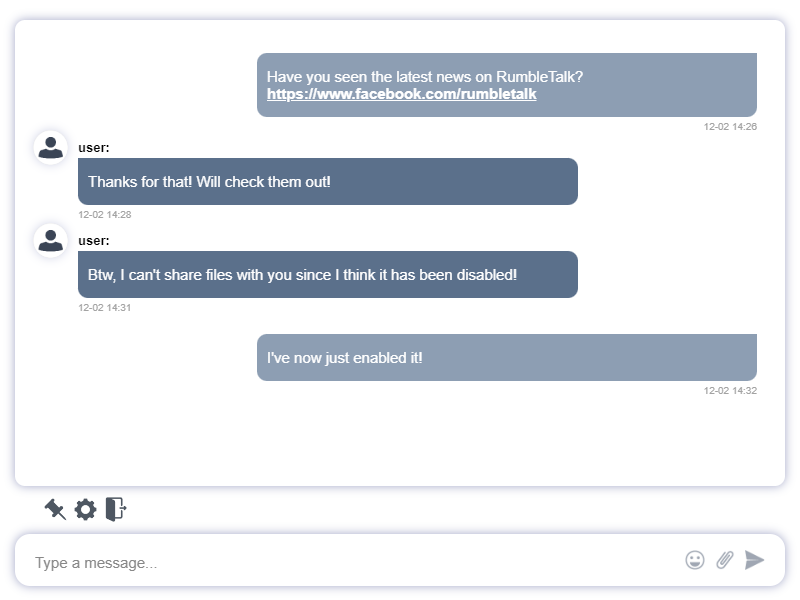
What keeps product-level chat healthy is structure:
- Logged-in users
- Clear roles
- Explicit permissions
This structure creates:
- Accountability
- Trust
- Predictability
When chat respects the same identity system as the product, it feels natural. Users know who is speaking, why they matter, and what authority they have.
This is foundational for chat for SaaS companies that want chat to scale without chaos.
Human Control vs Automation: Why This Tension Is Growing
As AI-generated content becomes more common, a new problem is emerging.
Users often don’t know:
- Who wrote a message
- Whether a response is automated
- Who is responsible for an answer
This uncertainty erodes trust.
Group chat inside SaaS products acts as a counterbalance.
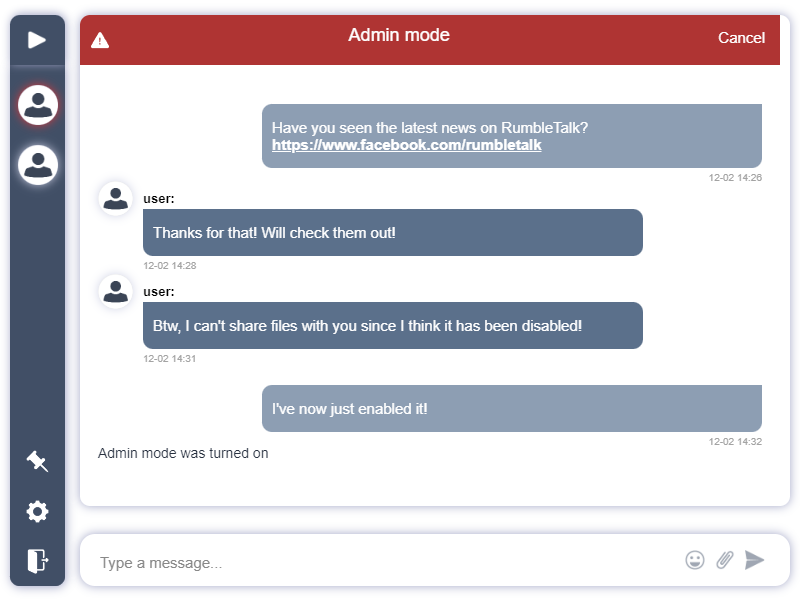
Human-led chat spaces provide:
- Visible authorship
- Clear accountability
- Social cues that automation lacks
AI can assist, summarize, highlight, and moderate, but control remains human.
In a world full of automated tools, chat for SaaS companies becomes the place where real people are clearly present.
The Technical Shift Behind Product-Level Chat
Treating chat as part of the product changes how it’s built.
Product-level chat typically requires:
- Tight integration with authentication
- Role synchronization
- Persistent message storage
- Custom UI alignment
- Event-driven behavior
These are architectural decisions, not cosmetic ones.
Once you implement chat this way, removing it would require redesigning the product itself. That’s the definition of a product layer.
Chat as a Living Knowledge System
Over time, group chat becomes more than communication.
It becomes:
- A record of decisions
- A source of real-world examples
- How users actually use the product in this way
Unlike static documentation, chat:
- Evolves continuously
- Reflects real behavior
- Captures nuance and debate
This living knowledge layer often answers questions faster and more accurately than formal docs.
Why Chat for SaaS Companies Does Not Suffer Feature Fatigue
Features are constantly questioned:
- Is this still useful?
- Can we remove it?
- Is there a cheaper alternative?
Communities aren’t questioned the same way.
Once users invest socially:
- They adapt to change
- They tolerate imperfections
- They contribute value
That’s why chat, when treated as a platform layer, doesn’t age like features do. It grows alongside its users.
Common Mistakes SaaS Companies Still Make
Even with good intentions, a few mistakes appear repeatedly:
- Treating chat as a generic widget
- Disconnecting chat from user identity
- Ignoring moderation and structure
- Over-automating early interactions
These mistakes usually come from thinking about chat as functionality instead of infrastructure.
The Future of Chat Inside SaaS Products
Looking forward, chat inside SaaS products will likely become:
- More contextual
- More structured
- More deeply integrated
- More human-led, with AI assistance
As SaaS products continue evolving into platforms, communication will sit at the center, not the edges.
Chat Is Becoming Part of What the Product Is
For chat for SaaS companies, the shift is already happening.
The question is no longer:
“Should we add chat?”
It’s:
“How deeply should chat be embedded into the product?”
When chat is:
- Contextual
- Identity-aware
- Group-focused
- Persistent
It stops being a feature.
It becomes part of the product’s foundation, shaping how users learn, decide, and stay.
That’s why chat is no longer optional.