
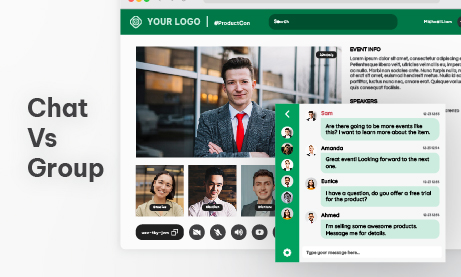
If you run a website, community, membership platform, SaaS product, or content hub, you’ve probably asked yourself this question: Should I build my community inside social media groups, or should I add a room chat directly to my website?
At first glance, social media groups seem like the easy choice. They’re free. They’re familiar. People already use them.
But when you zoom out and think long-term: branding, ownership, data, monetization, moderation, scalability, the decision becomes much more strategic.
In this article, we’ll break down:
- The real differences between room chat and social media groups
- Where each option works best
- The hidden trade-offs most website owners don’t consider
- How to technically implement a room chat properly (including auto-login and API control)
What Is a Room Chat?
A room chat is a live, real-time chat environment embedded directly inside your own website or platform.
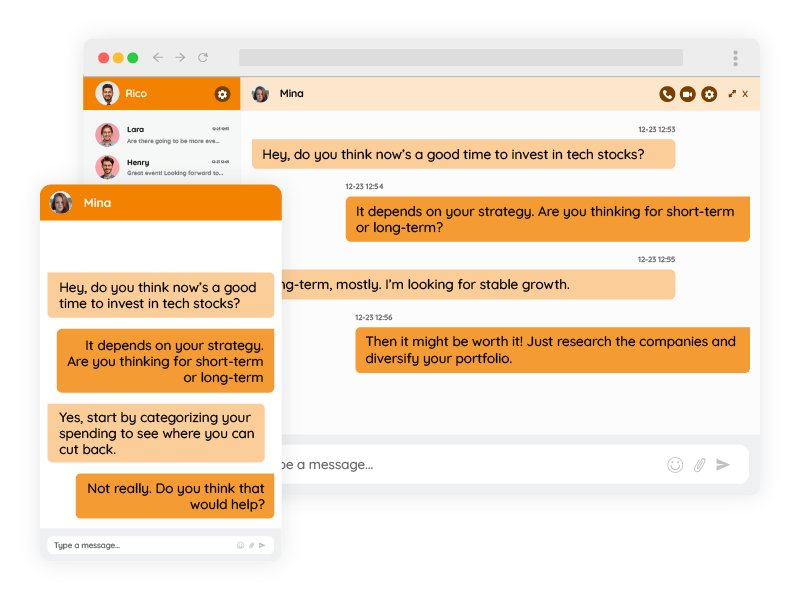
Unlike social media groups, a room chat:
- Lives on your domain
- Uses your branding
- Follows your moderation rules
- Can connect to your existing user database
- Can be automated via SDK or REST API
In simple terms:
A social media group is rented space. A room chat is owned space.
And that difference changes everything.
What Are Social Media Groups?
Social media groups exist on platforms like:
- Facebook Groups
- LinkedIn Groups
- Telegram Channels
- Discord Servers
They provide:
- Built-in audience discovery
- Notifications
- Zero setup
- Familiar UX
But they also come with constraints that many business owners underestimate.
Ownership: The Biggest Difference
Social Media Groups
When you use a social platform:
- You do not control the algorithm
- You do not control reach
- You do not control design
- You do not control data access
- You can lose your group if the platform changes policy
Your audience is technically not yours.
If a platform limits visibility tomorrow, your engagement drops overnight.
Room Chat
With this, you:
- Control visibility
- Control moderation
- Control access (public / private / paid members only)
- Control design
- Control user identity
You are building community equity on your own digital property.
For businesses, this distinction matters more over time.
Branding and Professional Positioning
When users engage inside a social media group, they see:
- Competing notifications
- Ads
- Distractions
- Competitors’ content
Even if your community is strong, attention leaks everywhere.
With a room chat, the entire experience happens inside your platform:
- Your logo
- Your product
- Your landing pages
- Your upsells
- Your ecosystem
The chat becomes part of your product, not a side channel.
For SaaS companies, membership sites, educators, traders, and content creators, this shift is powerful.
Engagement Depth: Shallow vs. Focused
Social media groups are noisy.
Users scroll.
They skim.
They get distracted.
Room chat is different because:
- It’s synchronous (real-time interaction)
- It feels event-driven
- It keeps users present
- It encourages participation over passive scrolling
When someone joins, they are intentionally entering a live space.
That changes behavior.
Moderation and Control
Let’s talk about something practical: moderation.
Social Media Groups Moderation
- You rely on the platform’s tools
- You follow their content rules
- You may face automated moderation decisions
- Appeals can take days
You are one group among millions.
Room Chat Moderation
With a room chat, you can control:
- Pre-moderation (approve messages before they appear)
- Post-moderation (remove inappropriate messages instantly)
- Banned words filtering
- User banning
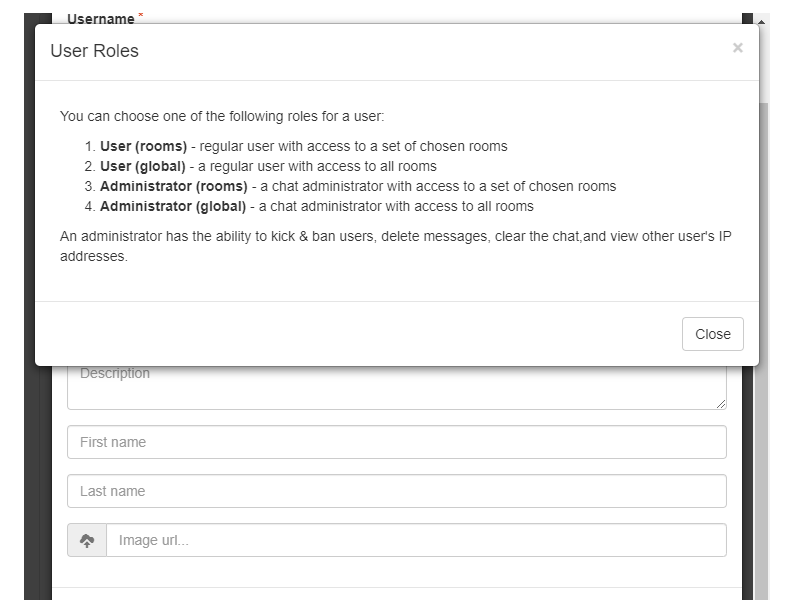
- Role-based permissions (admins, moderators, members)
This is especially important for:
- Paid communities
- Educational platforms
- Live events
- Financial discussions
- Professional communities
Your rules. Your standards.
Data and User Identity
This is where room chat becomes technically superior for product builders.
Social media groups give you:
- Limited data
- No full user export
- No API-level integration
- No deep user analytics
You can’t connect your CRM, can’t sync membership tiers, and can’t automate access easily.
With a room chat, you can:
- Auto-login users from your own system
- Sync roles (premium vs free users)
- Create rooms dynamically via REST API
- Control access via your backend
This turns your chat into infrastructure, not just conversation.
Technical Integration: How Room Chat Works in Practice
Let’s go deeper.
A properly implemented chat should integrate with your platform in one of two main ways:
Option 1: SDK / JavaScript Integration with Auto Login
This allows you to:
- Pass user ID from your database
- Pass nickname automatically
- Assign roles (admin / moderator / member)
- Avoid separate login
Example logic:
- User logs into your website.
- Your backend generates a secure hash.
- The room chat widget loads with auto-authenticated identity.
No friction.
No duplicate accounts.
The chat becomes invisible infrastructure.
Option 2: REST API for Automation
If you want more control, you can use REST API to:
- Create new chat rooms automatically
- Delete rooms
- Update room design
- Create users remotely
- Assign permissions
- Manage access for events
Use cases include:
- Creating a new room per webinar
- Creating private rooms per membership tier
- Opening temporary rooms for live launches
- Segmenting traders into strategy rooms
This is where it becomes scalable.
SEO and Traffic Considerations
Here’s something many website owners overlook:
When your discussion happens in social media groups, Google does not index your community conversations.
Your engagement does not improve your SEO.
When your room chat is embedded inside your website:
- Users stay longer
- Time on page increases
- Bounce rate decreases
- Engagement signals improve
While live chat content itself may not be indexed directly, the behavioral signals benefit your site performance.
Your domain becomes the hub, not someone else’s.
Monetization Potential
Social media groups are difficult to monetize directly.
You depend on:
- Affiliate links
- External landing pages
- Indirect sales
With a room chat, you can:
- Restrict access to paying members
- Bundle chat as part of subscription tiers
- Offer VIP rooms
- Create premium event-based rooms
- Provide sponsor visibility inside your own ecosystem
You are monetizing attention within your own platform.
Security and Privacy
Privacy is increasingly important.
With social media groups:
- User data belongs to the platform
- Messages live on external servers
- You cannot fully control data handling
With room chat:
- You choose the provider
- You choose authentication method
- You control access logic
- You integrate with your privacy policy
For regulated industries (finance, health education, professional communities), this matters.
Scalability: One Group vs. Multiple Spaces
Social media groups often become chaotic over time.
Everything happens in one feed.
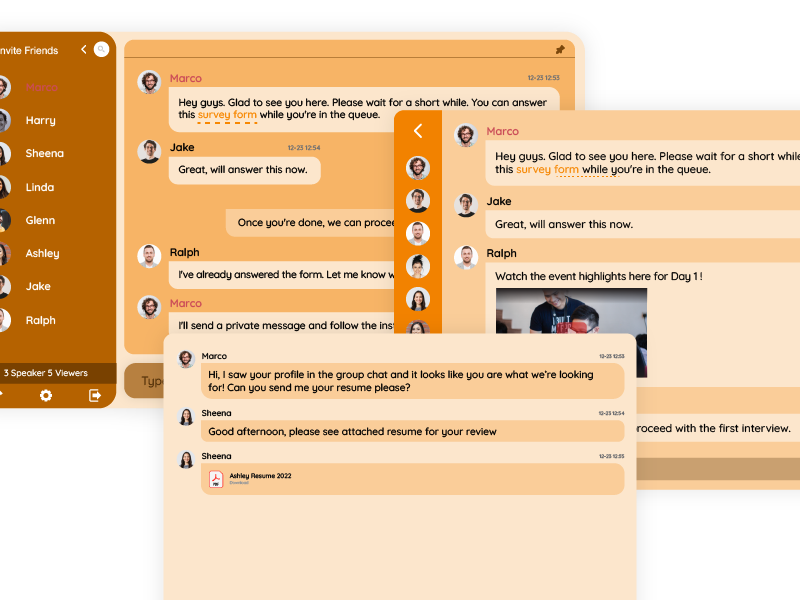
With room chat, you can:
- Create multiple topic-based rooms
- Separate beginner vs advanced users
- Create event-specific rooms
- Segment by language
- Separate support from general discussion
Structured communication improves quality.
When Social Media Groups Still Make Sense
Let’s be balanced.
Social media groups are useful when:
- You are just starting
- You want audience discovery
- You have zero budget
- You don’t control your own platform
They are excellent for early traction.
But long term?
Owning your community space is strategic.
A Practical Migration Strategy
If you already have a social media group, you don’t need to delete it.
Instead:
- Keep the group for awareness.
- Add a room chat to your website.
- Encourage members to join your on-site discussions.
- Host exclusive events inside the chat.
- Gradually shift engagement to your platform.
Over time, your website becomes the main hub.
Real Business Scenarios Where Room Chat Wins
Here are common examples where room chat is stronger than social media groups:
- Membership platforms with tiered access
- Online trading communities
- Live streaming events
- Online courses
- SaaS products with user collaboration
- Online auctions
- Professional associations
In each case, integration and control matter.
Common Mistakes When Adding Room Chat
Even when choosing room chat, some website owners make mistakes:
- Not integrating auto-login (forcing double authentication)
- Not setting moderation rules
- Not designing the chat to match branding
- Not segmenting rooms properly
- Not using REST API for automation
The chat works best when treated as part of your product architecture, not a floating widget.
Cost Considerations
Yes, social media groups are free.
Room chat has cost.
But the real question is:
What is the cost of not owning your community?
If your entire engagement lives on a platform you don’t control, your business risk increases.
Room chat is an investment in stability.
The Long-Term View
Short term:
Social media groups feel easy.
Long term:
Room chat builds durable community infrastructure.
When your website becomes the center of engagement:
- You strengthen your brand
- You protect your audience
- You increase monetization flexibility
- You improve user retention
- You control your growth
That’s not just communication.
That’s strategy.
What Website Owners Should Decide
When choosing between room chat and social media groups, ask yourself:
- Do I want to rent attention or own it?
- Do I want algorithm dependency or infrastructure control?
- Do I want shallow engagement or focused interaction?
- Do I want fragmented data or full integration?
Social media groups are useful tools.
But a room chat transforms your website from a static platform into an interactive ecosystem.
If your goal is long-term growth, deeper engagement, and stronger ownership, room chat is not just an add-on.
It’s part of the foundation.