
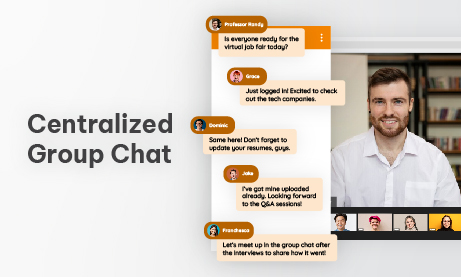
Live streaming has become a standard way to deliver content online. Webinars, product launches, trading sessions, live courses, online events, and creator broadcasts all rely on real-time video to reach their audience.
Alongside video, live chat has evolved from a “nice to have” feature into a core part of the experience. It is where questions are asked, feedback happens, and a sense of community is created.
Yet many platforms still design chat in a way that does not match how content is actually distributed. Each live stream gets its own chat room. If the same stream is embedded on multiple pages or platforms, each location ends up with a separate conversation.
While this may sound simple, it causes real problems as soon as your audience grows or your content appears in more than one place.
A centralized group chat solves these problems by keeping one shared conversation synced across every location where the stream appears.
This article explains why a centralized group chat consistently works better than separate chats per stream, from user experience to moderation, technical structure, and long-term scalability.
The Core Problem With Separate Chats Per Stream
At first glance, assigning a chat room per stream seems logical. Each stream gets its own space, its own messages, and its own context.
The problem starts when the same stream appears in more than one location.
Fragmented Conversations
Today, live streams are rarely limited to a single page. The same broadcast often appears on:
- A homepage
- A dedicated landing page
- A members-only area
- A partner website
- A mobile-optimized page
When each location has its own chat, the audience is split into isolated groups. People ask the same questions in different places, receive answers that others never see, and react to moments that never reach the full audience.
Instead of one shared experience, you end up with multiple partial ones.
Reduced Engagement in Each Chat
Chat activity feeds participation. When people see an active conversation, they are more likely to join in.
With separate chats, activity is diluted. Each room has fewer messages, longer pauses, and less visible momentum. Even if the total audience is large, each individual chat can feel quiet.
A centralized chat concentrates engagement into one visible stream of messages, which naturally encourages more participation.
Loss of Continuity for Returning Users
Users often move between pages or platforms during an event. They might start watching on your main site and later continue from a different page or device.
With separate chats:
- Their previous messages disappear
- The conversation feels unfamiliar
- The sense of community is lost
A centralized chat preserves continuity. The discussion follows the stream, not the page.
What a Centralized Group Chat Actually Means
A centralized group chat is a single chat room shared across multiple embeds.
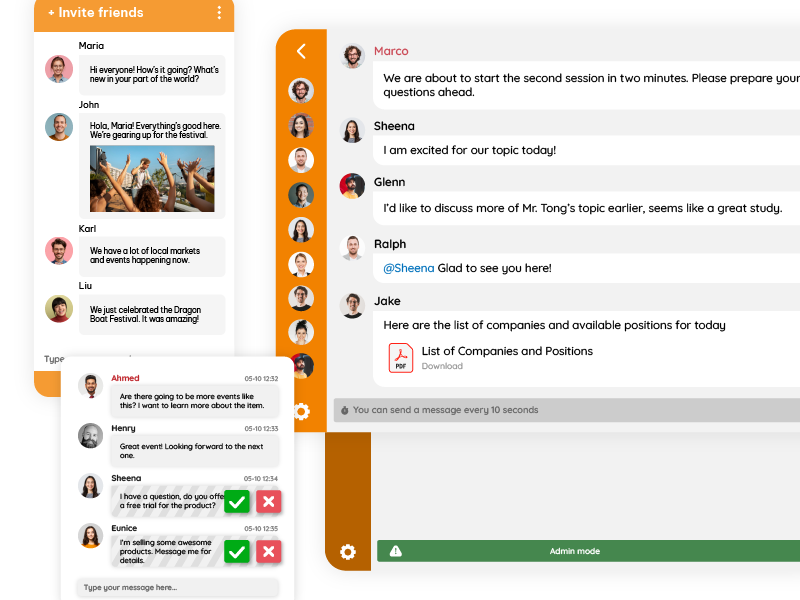
No matter where the user joins from:
- They see the same messages
- They participate in the same discussion
- Moderators manage one unified conversation
The live stream can exist in many places, but the chat remains one shared space.
Why a Centralized Group Chat Creates a Better User Experience
One Conversation Instead of Many
A single shared chat makes the experience feel collective. Viewers see questions from people on different sites, answers that benefit everyone, and reactions that reflect the entire audience.
This is especially important for live events, educational sessions, and broadcasts where community energy matters.
People are far more likely to engage when they feel part of a larger group.
Faster and Clearer Q&A
When all questions flow into one chat:
- Hosts do not miss important messages
- Moderators respond once instead of repeating answers
- Follow-up questions make sense to everyone
The conversation becomes easier to follow and more valuable for the entire audience.
Stronger Momentum Throughout the Stream
Live chat has rhythm. Messages build on each other, reactions spread, and discussions evolve over time.
Separate chats constantly reset this rhythm. Centralized chat allows momentum to grow naturally from the beginning of the stream to the end.
Centralized Group Chat Is Easier to Moderate
Moderation becomes significantly simpler when there is only one chat to manage.
Instead of switching between multiple rooms, moderators focus on a single flow of messages. This allows faster responses, clearer enforcement of rules, and better awareness of what is happening in real time.
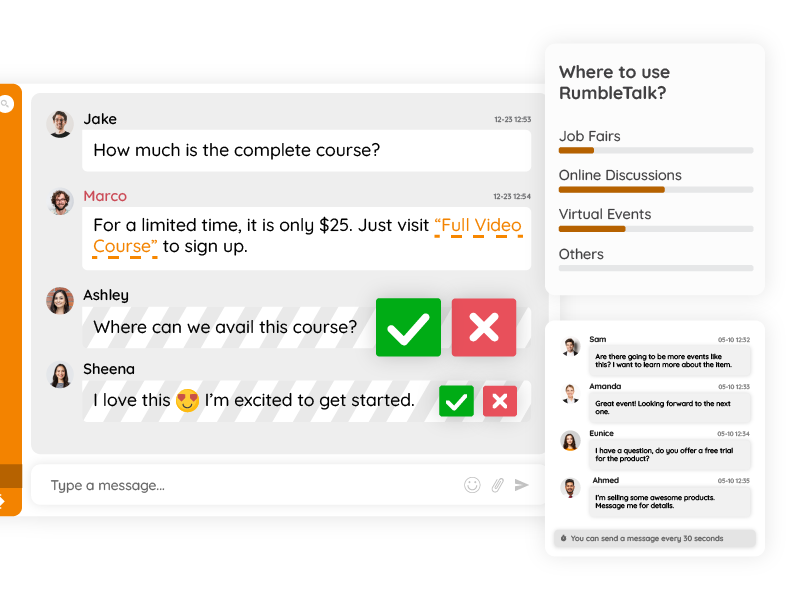
Consistency also improves. With one chat, there is one set of rules, one moderation style, and one clear standard for behavior. Users are less likely to feel treated unfairly or confused about what is allowed.
Advanced moderation features such as message approval, user blocking, or temporary silencing are far more effective when applied to one shared conversation rather than duplicated across multiple rooms.
Technical Advantages of a Centralized Group Chat Structure
From a technical standpoint, centralized chat dramatically reduces complexity.
Instead of creating and managing a separate chat room for each page or stream, you create one room and embed it wherever the stream appears. All configuration, permissions, and settings are controlled from a single place.
Better Use of SDK and User Authentication
When chat is integrated using an SDK, user identity becomes especially important.
With a centralized group chat:
- Users are recognized consistently across all pages
- Roles and permissions follow the user
- Moderation actions apply globally
This also reduces spam. When users log in through your existing user system, anonymous abuse drops significantly. Separate chats make it easier for bad actors to reappear unnoticed.
Unified Chat History
A centralized chat creates one continuous conversation history. This makes it easier to review discussions, extract common questions, and reuse insights for future content or support.
With separate chats, data is scattered and harder to analyze.
Centralized Chat Across Multiple Websites and Platforms
One of the strongest arguments for centralized chat is content distribution.
Many organizations embed the same live stream across:
- Their own website
- WordPress pages
- Partner platforms
- Campaign microsites
A centralized chat ensures that the audience stays united regardless of where they are watching from. Engagement grows instead of being split.
This is especially powerful for syndicated content and collaborative events.
How Separate Chats Hurt Live Events
Separate chats often lead to repeated questions, missed answers, and confusion for hosts and moderators.
Audience energy also suffers. When viewers see a slow or empty chat, they assume fewer people are watching and are less likely to participate themselves.
From an analytics perspective, multiple chats make it harder to understand engagement patterns. A single chat gives a clear picture of activity, peak moments, and audience behavior.
Use Cases Where Centralized Chat Shines
Large audiences benefit from one moderated conversation, shared announcements, and collective reactions.
Students learn from each other’s questions. Centralized chat improves clarity and reduces repetition.
Trading and Financial Broadcasts
Timing matters. Centralized chat ensures everyone sees alerts and discussions at the same moment.
Content Creators and Communities
A shared chat helps viewers recognize each other, return regularly, and feel part of an ongoing community.
Design and Customization Remain Simple
Centralized chat does not mean limited design.
You can still control appearance, branding, layout, and responsiveness. The difference is that changes apply everywhere at once, ensuring a consistent look and feel across all embeds.
This saves time and reduces errors when managing multiple pages.
Centralized Chat Scales Better Over Time
As your audience grows, separate chats become harder to manage. Moderation effort increases, technical maintenance grows, and consistency suffers.
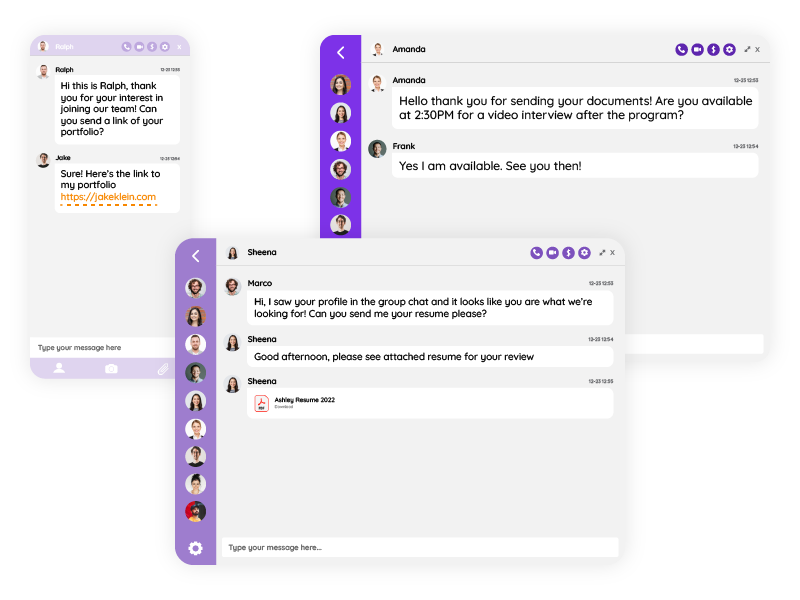
Centralized chat scales naturally. It requires fewer resources, simplifies operations, and remains predictable as your platform expands.
When Separate Chats Make Sense
There are cases where separate chats are appropriate, such as completely unrelated streams, different languages with no overlap, or private sessions that must remain isolated.
However, when the content is the same and the audience is shared, centralized chat almost always delivers better results.
Chat Is Part of the Experience, Not an Add-On
Live chat is no longer just a feature. It shapes how people experience live content.
Fragmented chat fragments the experience. Centralized chat unifies it.
By keeping one conversation synced across all locations, you create stronger engagement, clearer communication, easier moderation, and a more memorable live experience for everyone involved.